Miracles you can still visit · Question 5
There have been Eucharistic miracles in Poland recently. Has the Vatican approved them?
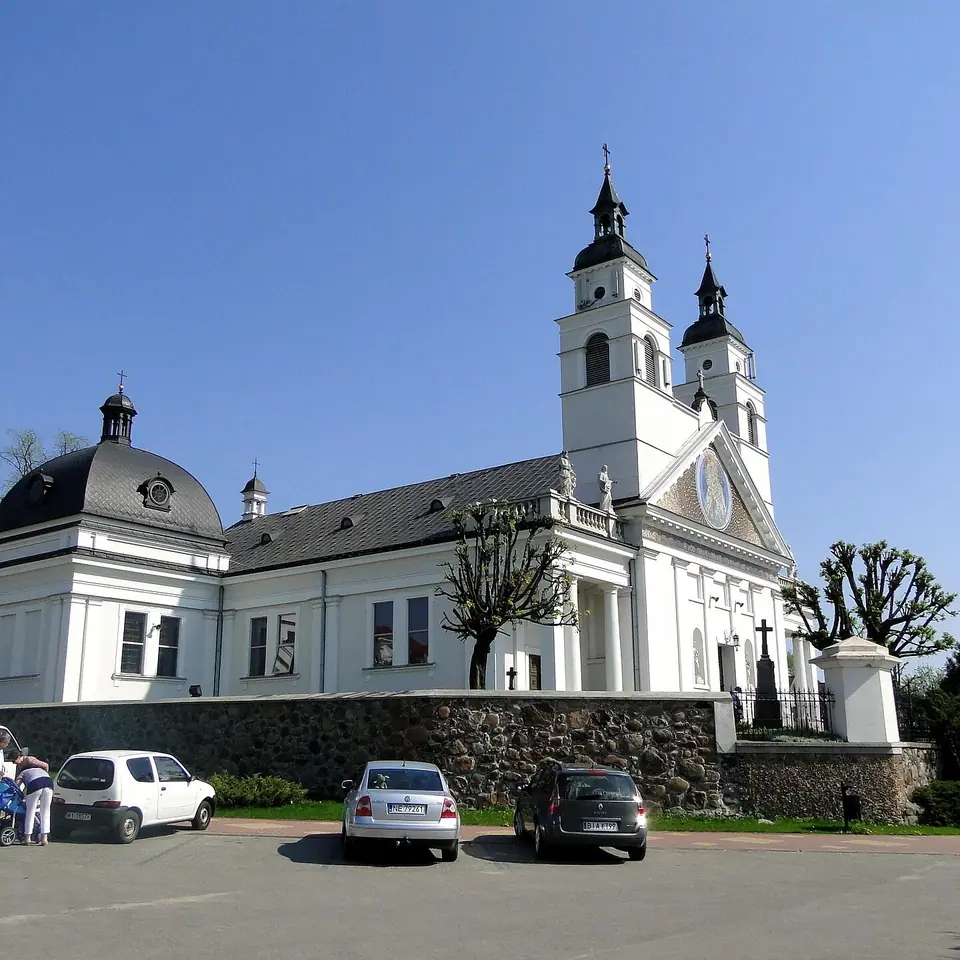
The question: “Sokółka, Legnica, and Tixtla in Mexico all reached the same conclusion. Isn't that settled?”
The Church's answer: All three are events of this century and the witnesses are alive. But the Holy See has approved none of them. Every one is a judgment of the local bishop.
On October 21, 2006, at the parish of San Martín de Tours in Tixtla, in the Mexican state of Guerrero, a host began to bleed in the hands of a sister distributing Communion during a retreat. Bishop Alejo Zavala Castro of Chilpancingo-Chilapa came at once and set up a theological commission, and on October 12, 2013, announced his recognition in a pastoral letter.
On October 12, 2008, at the morning Mass in the parish of St. Anthony of Padua in Sokółka, Poland, a priest dropped a host. Following the rules, Sister Julia Dubowska, who was in charge of the sacristy, placed it in water and locked it in a safe. When the safe was opened a week later the host had not dissolved in the water and there was a red formation at its center. Two professors of pathology at the Medical University of Białystok reviewed it separately and found tissue consistent with the heart muscle of a dying person. They stressed in particular that the fibers of the host and the fibers of the heart muscle were interwoven with each other.
On Christmas Day 2013 the same thing happened at the church of St. Hyacinth in Legnica, Poland, and Bishop Zbigniew Kiernikowski made it public on April 10, 2016.
What the Church has actually recognized: All three are recognitions by a diocesan bishop. The accurate phrase is not “a Eucharistic miracle officially recognized by the Church in Poland” but “a Eucharistic miracle recognized by the local bishop.”
The pushback: “That the conclusions agree is itself the problem.” — Apart from Lanciano, the modern cases have effectively passed through one investigator's network. The same method yields the same result. That the blood type is AB in every case is no argument either, because bacteria share that antigen, so the same contaminant gives the same blood type. And the initial conditions of the three events are identical. Putting a dropped host in water and leaving it in the dark for several days is precisely the experimental condition that produced the red areas.
If they press further: “So is it all contamination?” — You can't conclude that either. What grew in the replication experiments was fungi and bacteria, not the structure of muscle fibers. The two professors who examined Sokółka had nothing to do with that network, and the finding that the fibers were interwoven is hard to explain by surface contamination. Still, the thing that could be done and isn't keeps repeating. In no case has a sample been sent blind to an independent third laboratory for replication. The samples survive, and Poland has plenty of forensic facilities.
In one sentence: “Not one has Vatican approval. And all three could be tested again today, and nobody has done it.”