Miracles you can still visit · Question 9
The blood at Naples liquefies every year. Is it a miracle the Church recognizes?
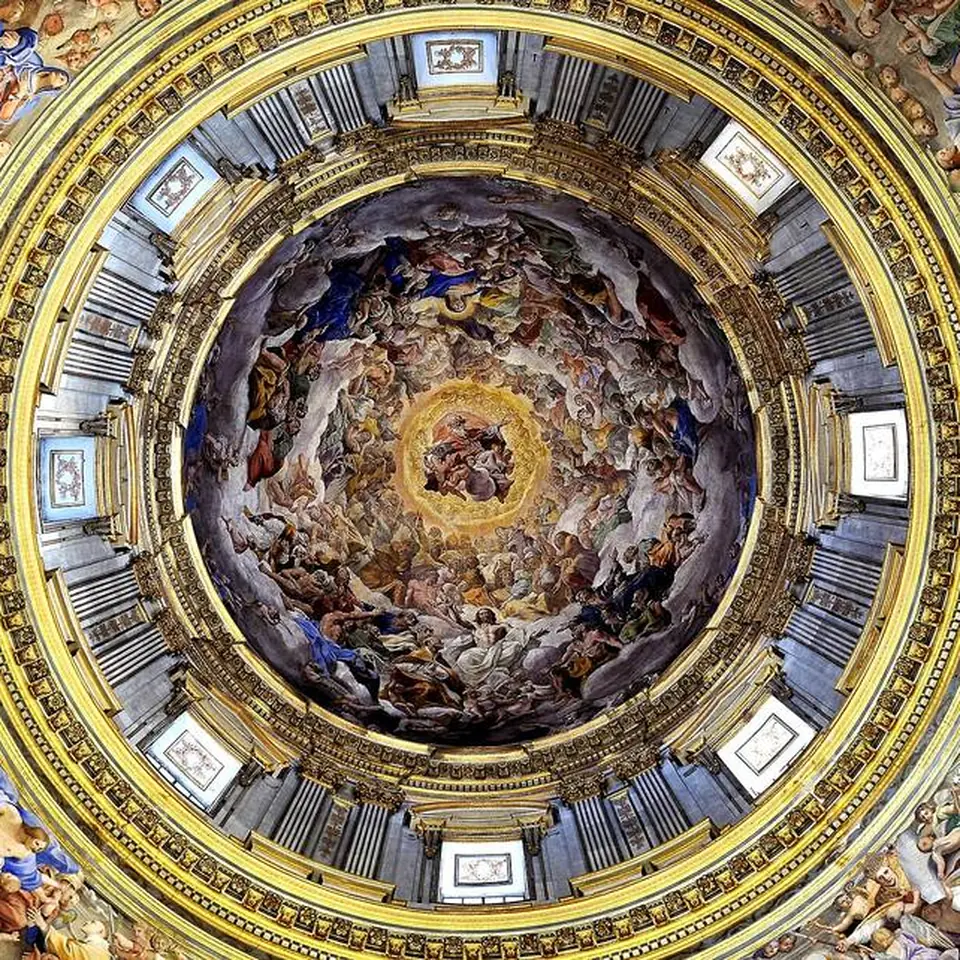
The question: “It's on television every year and the archbishop even makes an announcement. Isn't it officially recognized?”
The Church's answer: No. The Church has never called it a miracle. The archdiocese of Naples only reports whether liquefaction occurred. And yet it is the only phenomenon observed repeatedly for 637 years.
St. Januarius was bishop of Benevento and was beheaded on September 19, 305, at the Solfatara in Pozzuoli. It is a volcanic crater still venting sulfur, and you can visit it. Tradition says a woman named Eusebia gathered his blood into glass ampoules.
What shaped the character of this devotion was the year 1527. In 1526–27 Naples endured a French siege, a return of the plague, and an eruption of Vesuvius all at once. The survivors drew up a contract with the saint before a notary on January 13, 1527, promising veneration in exchange for protection from plague and volcano. Which is why the custodians are not clergy either. A lay deputation founded in 1601 — twelve families — has guarded the treasure and the relics for five hundred years.
The ceremony takes place three times a year: before the first Saturday in May, on the feast day of September 19, and on December 16. The December date commemorates his intercession at the eruption of Vesuvius in 1631. The archbishop takes the ampoule from the safe, carries it to the high altar, tilts it, and shakes it. In the crowd are women who claim descent from Eusebia, who shout at the saint to hurry and sometimes scold him. If it liquefies, the archbishop proclaims, “I bring you good news, the blood has liquefied,” and the guns sound from the Castel Nuovo.
What the Church has actually recognized: Nothing. On September 19, 2024, the very day the liquefaction occurred, the archbishop of Naples told the faithful: “Christian hope cannot rest on extraordinary signs alone.”
The pushback: “It has been reproduced in a laboratory.” — A short paper by a team of chemists at the University of Pavia appeared in Nature in 1991. They made a thixotropic gel from materials available in the Middle Ages that set when left alone and liquefied when shaken, matching the color and behavior of the substance in the ampoule. Beyond that, no sample has been taken outside the seal for analysis since 1902. There are years when the liquefaction fails, and connecting each of those to a disaster after the fact is textbook confirmation bias.
If they press further: “Then hasn't it been settled?” — The reproduction made a different substance that behaves similarly; it did not prove that the substance in the ampoule is that. And the gel loses its thixotropy after a few years. Six hundred and thirty-seven is a problem of a different order. If it were thixotropy, shaking would have to liquefy it every time, and there are years when the archbishop turns and shakes it and nothing happens, and years when it is already liquid before anyone touches it. There have been years when it liquefied in cold December and failed in hot September, so the correlation with temperature is weak too. The way to settle it already exists: open the ampoule. The archdiocese does not permit it.
In one sentence: “A miracle the Church has never recognized. Knowing that, the people of Naples still fill the cathedral in the six hundred and thirty-seventh year.”