0 / 8 answered

Kept in this browser alone

Faith — what we believe

Mary and the saints

Choose an option and you are told at once whether it was right. The answer and the reason wait behind “Show the answer”.
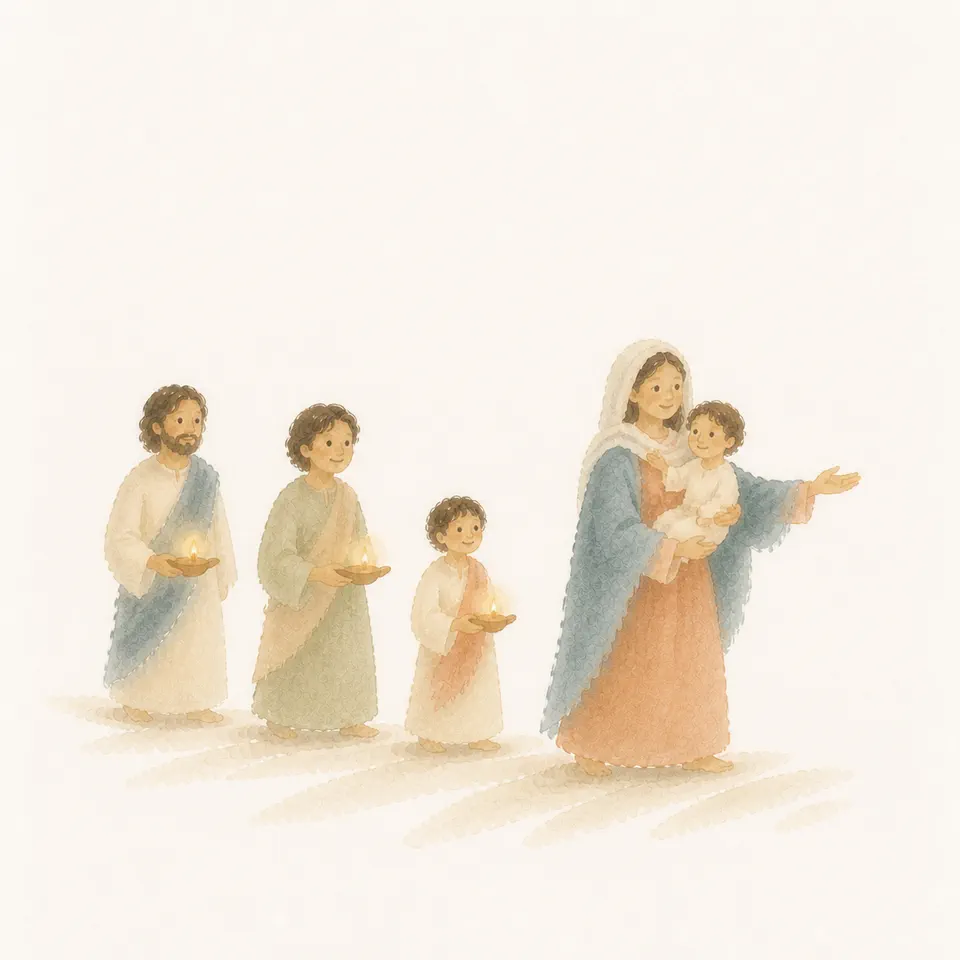
A watercolor of Mary carrying the child in one arm with her other hand open to the side, followed by three people each holding a lit oil lamp
  1. Why does the Church give Mary the title “Mother of God”?

    Show the answer

    Answer ③ Because the one Mary bore is a single person who is true man and true God at once

    A mother gives birth to a person, not to a nature. The one Mary bore is the Son of God made flesh, one person, and so she is the Mother of God. Lean toward the fourth answer and you have the explanation of Nestorius that the Council of Ephesus rejected; the first makes Mary the source of the divine nature, which is a plain mistake.

    Catechism of the Catholic Church 466, 495

  2. What does the dogma of the Immaculate Conception mean?

    Show the answer

    Answer ② That from the first instant of her own conception Mary was kept free of original sin, the merits of Christ being applied to her beforehand

    The Immaculate Conception points to Mary's own conception, not to the conception of Jesus. Reading it as the first answer is the commonest confusion, and the fourth mixes it up with the dogma of the Assumption. The third is wrong as well — Mary too was saved by the redemption her Son won; she simply received that salvation beforehand, and in the fullest way.

    Catechism of the Catholic Church 490-493

  3. The “brothers of Jesus” in the Gospels are other children Mary gave birth to.

    Show the answer

    Answer ② No

    The Church confesses the perpetual virginity of Mary. “Brother” in Scripture is a wide word that stretches to cousins and other close relatives, and two of the men named that way, James and Joseph, are introduced in the Gospels themselves as the sons of a different Mary.

    Catechism of the Catholic Church 499-501

  4. Which of these best states what the dogma of the Assumption tells us?

    Show the answer

    Answer ④ Mary was taken up body and soul into the glory of heaven, and this shows us in advance the resurrection the whole Church hopes for

    The Assumption is a gift given to Mary alone and, at the same time, an advance showing of the resurrection promised to all of us. The first answer speaks as though the dogma had settled a point it deliberately left open; the second mixes up the Son, who ascended by his own power, with the mother, who was taken up by God; the third inflates veneration into adoration.

    Catechism of the Catholic Church 966, 974

  5. The veneration offered to Mary and the saints is different in its very nature from the adoration offered to God alone.

    Show the answer

    Answer ① Yes

    Adoration is given to the Creator alone, while veneration honors what God's grace has brought about inside a human being. The difference is one of kind, not of degree, so however great the veneration offered to Mary, it never turns into adoration.

    Catechism of the Catholic Church 971, 2132

  6. What are we doing when we ask the saints to pray?

    Show the answer

    Answer ① Asking them to plead with God on our behalf

    Asking the saints is asking for their intercession — the same thing in kind as asking the person beside you to pray for you. The other three turn a saint into a source of grace or into a short cut, and they blur the one mediation of Christ.

    Catechism of the Catholic Church 956, 2683

  7. Who does “the communion of saints” include?

    Show the answer

    Answer ② Everyone — those on pilgrimage on earth, those being purified, and those already in the glory of heaven

    The communion means that the whole Church, in all three of its states, is joined as one body in Christ, giving help and receiving it. The first answer is the common misunderstanding that narrows “saint” down to those officially canonized; the fourth cuts the Church on earth away and leaves the exchange running one way only.

    Catechism of the Catholic Church 954-955, 962

  8. When the Church calls Mary “Mediatrix”, it means that something is added to the one mediation of Christ, or put in its place.

    Show the answer

    Answer ② No

    Mary's motherly office flows out of the one mediation of Christ and rests entirely upon it. So a prayer that asks Mary takes nothing away from what belongs to Christ; it is a road that brings you to him.

    Catechism of the Catholic Church 970