Mary and the saints · Question 2
Does ‘the Immaculate Conception’ mean the virgin birth of Jesus?
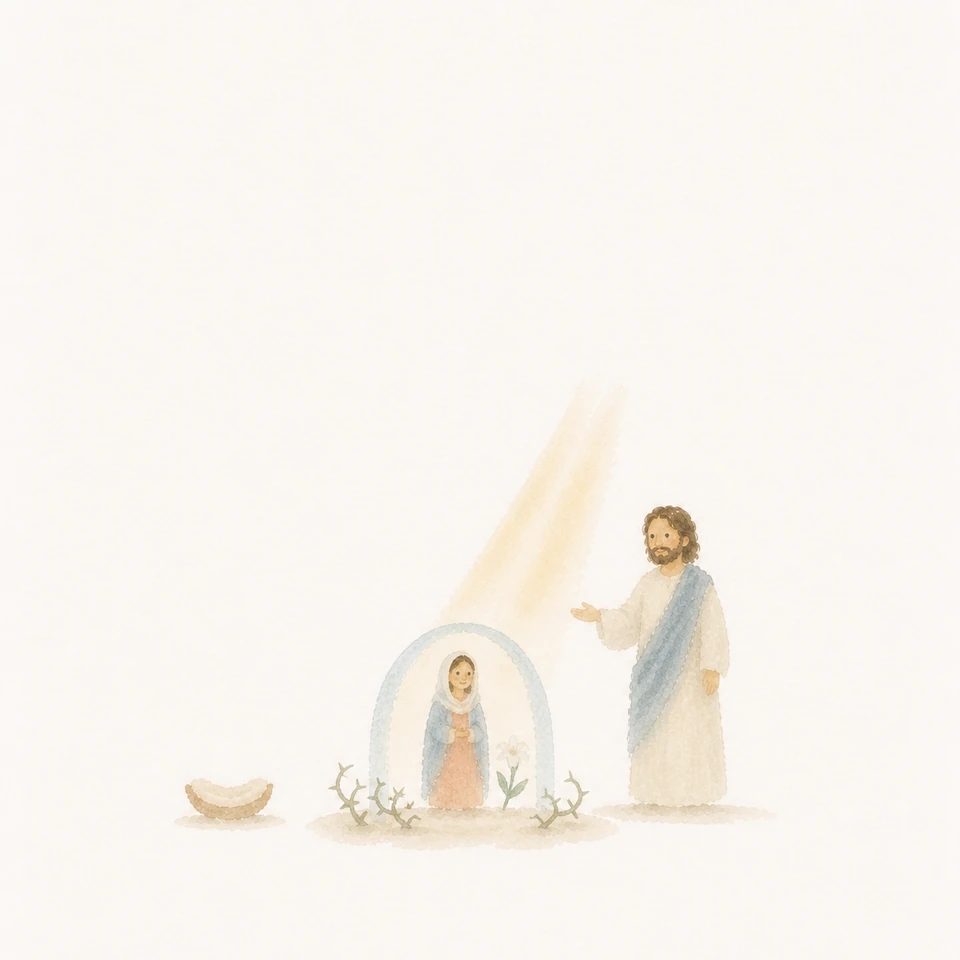
The question: “Doesn't the Immaculate Conception mean Mary conceived Jesus without a man?”
The Church's answer: They are two different events. The virginal conception of Jesus means that Mary conceived him by the power of the Holy Spirit, with no man involved. The Immaculate Conception is the doctrine that Mary herself, from the first instant of her own conception inside her mother, was kept by a singular grace of God from every stain of original sin.
It does not mean Mary was clean on her own without God's help, and it does not mean she had no need of the salvation Jesus won. Mary too was saved by Jesus Christ. The Church confesses only that the merits of Christ were applied to her beforehand, in the fullest way, so that she was protected from the start rather than pulled out after falling into sin. That is why Mary herself sings that she rejoices in “God my Savior.”
An analogy — pulled out of the pit, and caught before falling in
Hauling someone out of a pit is a rescue, and catching that same person before they fall in is also saving them from danger. The analogy shows only this difference: Mary was not someone who needed no Savior; she was protected in advance by the grace of Christ. It doesn't mean the whole mystery of original sin and grace works like a physical pit.
If they press further: “So Mary never sinned even once in her whole life?” — the Church teaches that by God's grace Mary was preserved clean from every personal sin as well, all her life long. This is not an independent superpower of hers; it is the fullest fruit the grace of Christ has borne inside one human being.
In one sentence: “The Immaculate Conception isn't the virginal conception of Jesus; it's the doctrine that from the first instant of her own conception Mary was protected from original sin by the grace of Christ.”