Priesthood and vocation · Question 8
“Priests take a salary and a house while preaching poverty — aren't they hypocrites?”
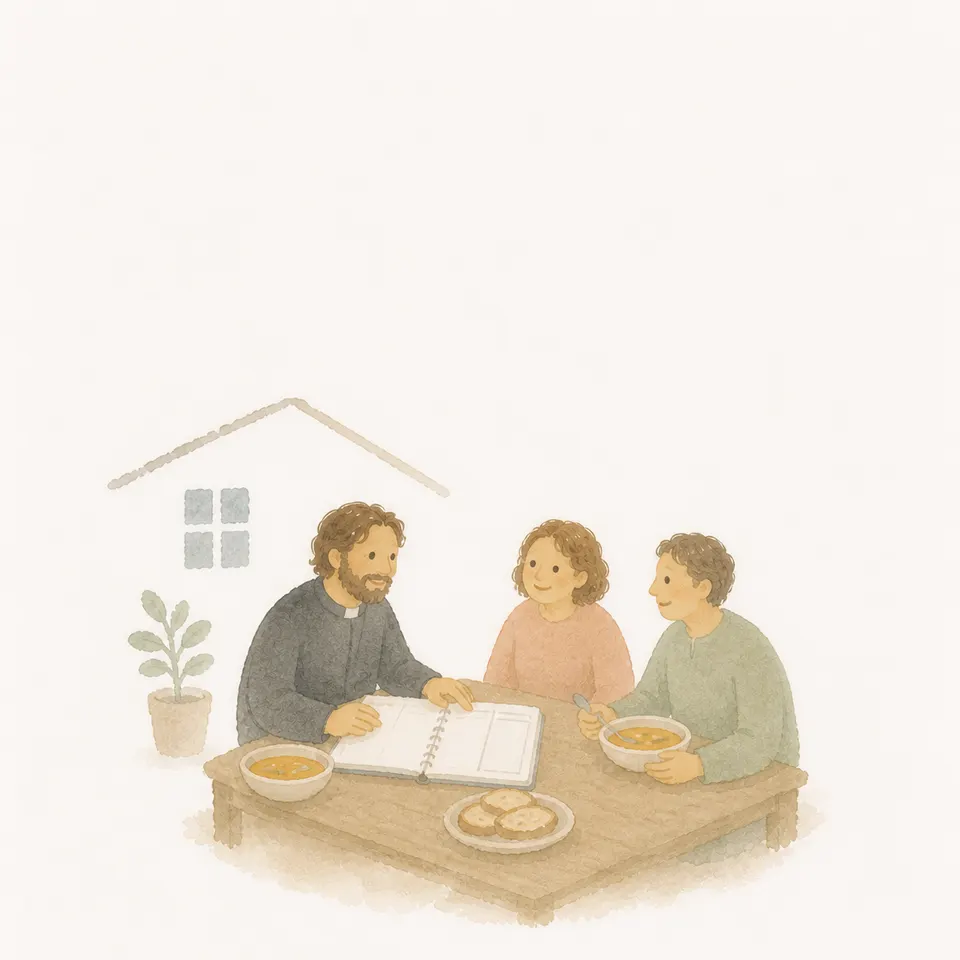
The question: “A priest who lives on the offerings of the faithful and drives a nice car — is he in any position to preach about sharing with the poor?”
The Church's answer: A diocesan priest usually does not take a vow of poverty in the form religious do, but he is required to live simply, to stay free in relation to possessions, and to make an option for the poor. A community may support its priest so that he can live a basic life, carry out his ministry, and be cared for in old age and illness. What is wrong is using church property and offerings for private ends, or trading on the office for gifts, investments, and business profits.
An analogy — the community card and the personal wallet
Being handed the school's budget card does not turn that money into the principal's personal property. Necessary spending is possible, but it has to be recorded and audited, and spending it on luxuries has to be answered for. The analogy shows that whoever is entrusted with the community's money carries both the authority to spend it and the duty to account for it. It does not mean church finances and a priest's living support are the same thing as a school budget.
If they press further: “Who decides what is luxury and what is necessary spending?” — Rather than taking the spender's word for it, there have to be published budget principles, multiple approvals, independent audits, and conflict-of-interest rules. A parishioner asking politely about the books is not showing a lack of faith.
In one sentence: “Supporting a priest's basic living is fine, but offerings are not his private property — he owes simplicity and transparent, audited accounts.”