The seven sacraments · Question 6.1
“Does Holy Orders make clergy a higher rank than lay people?”
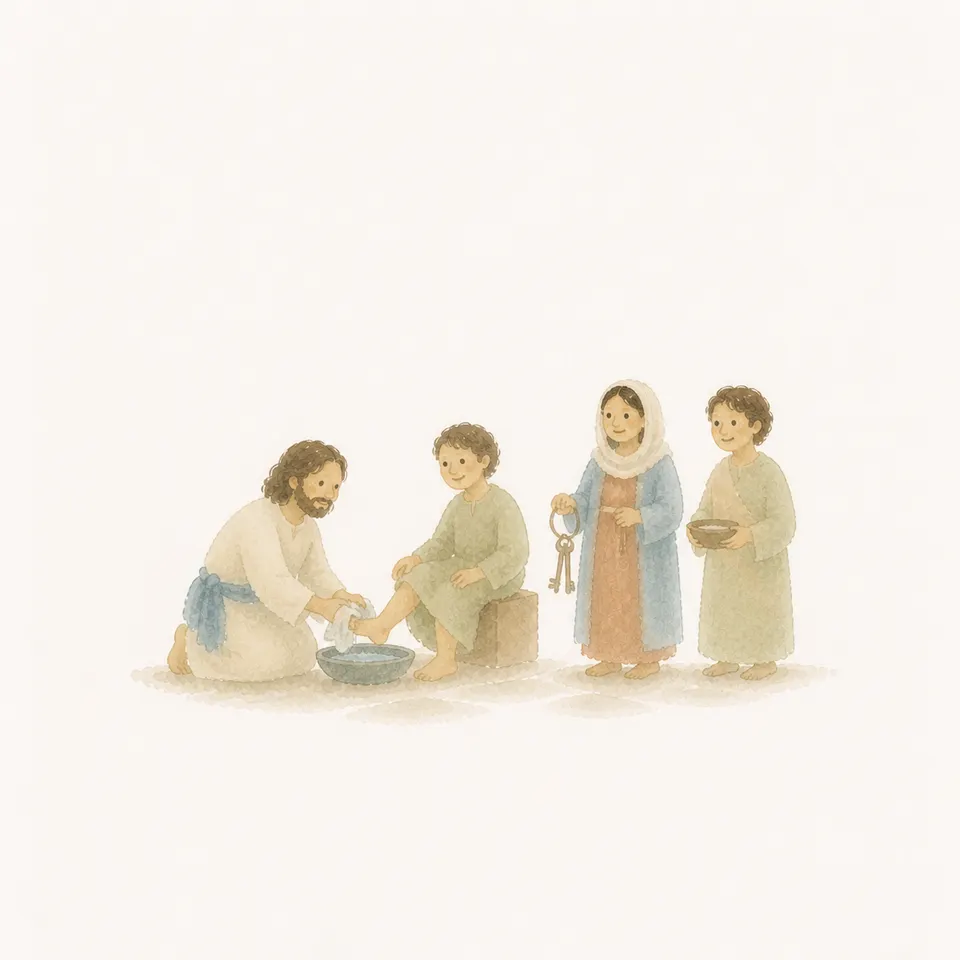
Holy Orders — a ministry of service for the community
The Church's answer: Everyone who is baptized holds the same human dignity and shares in the common priesthood of Christ. Holy Orders does not confer a higher grade of human being; it entrusts a particular office and a heavier responsibility for the sake of the community. The authority of ordained ministry is not a privilege for extracting obedience — it has to be service: preaching the word, celebrating the sacraments and caring for the weak.
An analogy — not insignia of rank but a key entrusted to you
Whoever is given the keys to a public library gets them not because they are worth more than the other users, but because they have been given the responsibility of opening the doors and protecting the collection. The analogy shows only that the authority of Holy Orders is a responsibility toward the community, not a privilege that raises a person's rank. It does not mean the Church and Holy Orders are the same as running a library.
If they press further: “But what about clergy who behave as though it were a privilege?” — That is clericalism, and it betrays what the sacrament means. The faithful are under no obligation to obey a dangerous or unjust order blindly, and the legitimate oversight and reporting procedures of both the Church and civil society are open to them.
In one sentence: “Holy Orders isn't a badge of rank that raises a person's worth — it's the sacrament of an office entrusted to you so that you serve the community under a heavier weight.”