The Creed and core doctrine · Question 7
Does “he descended to the dead” mean Jesus was punished in hell too?
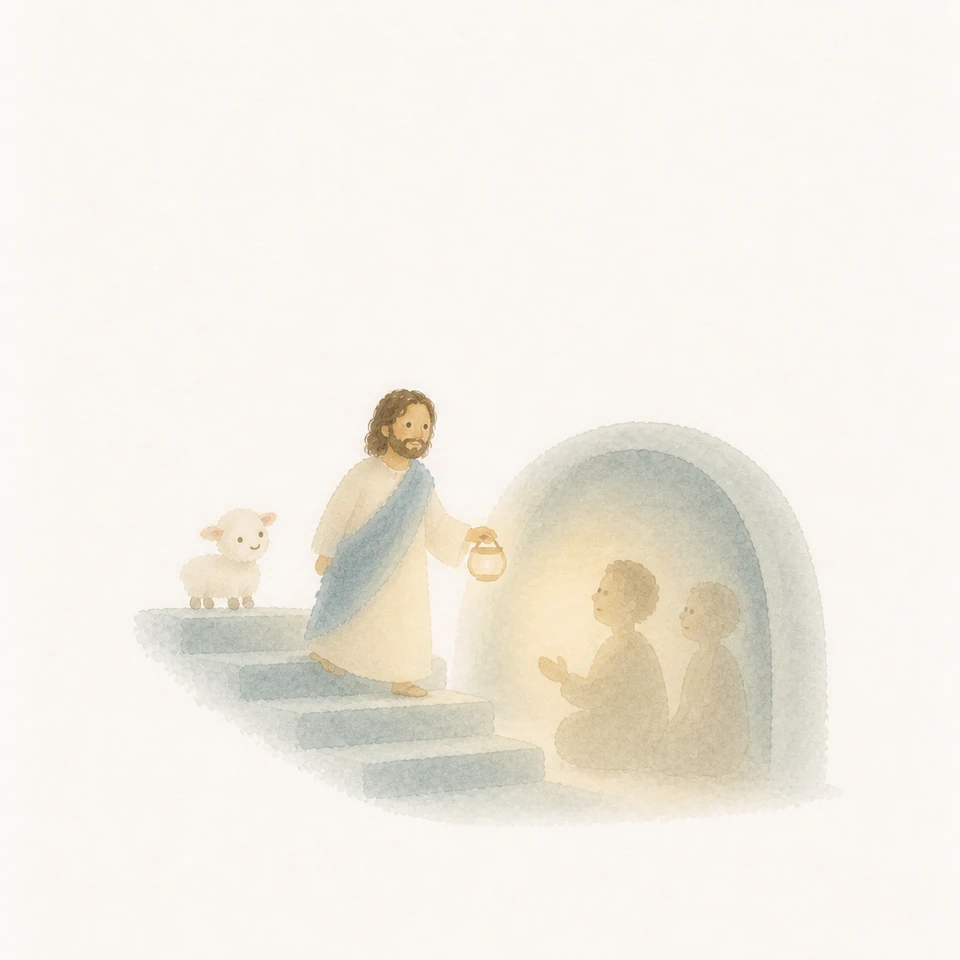
The question: “Did he have to take the punishment of hell on top of the cross?”
The Church's answer: The place named here does not mean the same thing as ‘hell,’ the eternal state of those who refuse God to the very end. It points to the condition of the dead, which Scripture calls Sheol or Hades. Professing that Jesus went down to the dead means that he really died, and that he went down to the deepest place death has.
Christ did not go there because the cross had come up short of saving and more punishment was owed. He announced the fullness of salvation to the righteous who had died before him and were waiting for the Savior, and he broke the power of death and opened the way of life. So the silence of Holy Saturday is not a stretch of time in which Jesus was defeated and shut in; it is one part of the Paschal victory that reaches even the dead.
If they press further: “Then did everyone who was among the dead go to heaven automatically?” — the Catechism explains that Christ did not go down to rescue the damned or to abolish hell, but to set free the righteous who were waiting for the Savior. This article must not be stretched into the claim that a fresh chance to choose is handed to everyone after death.
In one sentence: “‘He descended to the dead’ doesn't mean Jesus took extra punishment in hell; it means he truly died and carried the victory of salvation even to the dead.”